Technology
How to Read Shopify Taiwan Case Studies: Do Not Just Copy the Website, Learn How Customers Are Retained
When researching Shopify Taiwan case studies, brand owners should look beyond design, apps, and checkout. This guide explains how Taiwan ecommerce brands can turn Shopify traffic into LINE friends, customer intent signals, and repeat engagement.
When brand owners search for "Shopify Taiwan case studies," they usually are not just looking for nice-looking websites.
What they really want to know is this: If my brand also builds its website on Shopify, will we sell more? Will customers come back more often? Can we stop paying to reacquire the same audience again and again through ads?
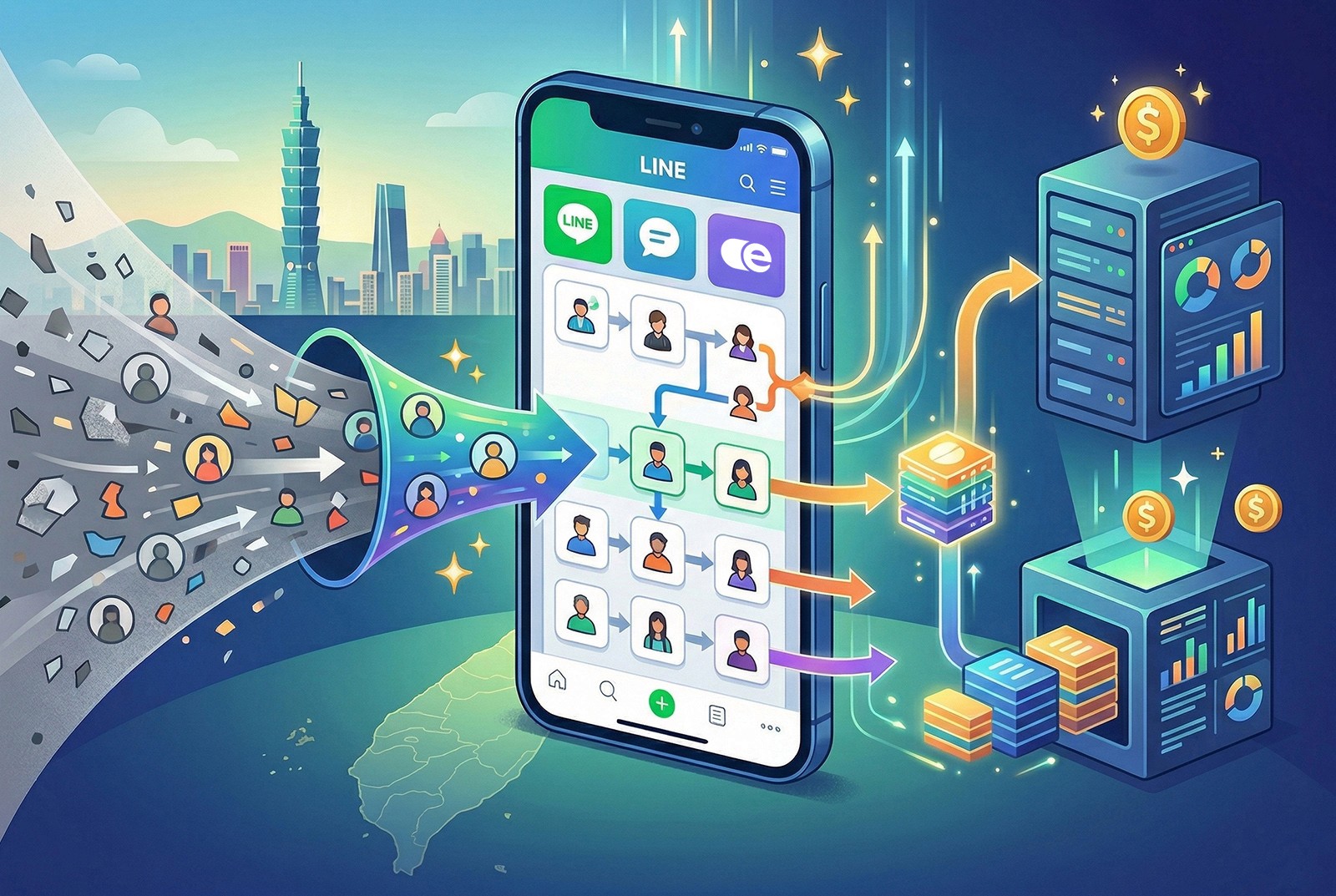
My view is simple: in 2026, the right way to read Shopify Taiwan case studies is not to focus only on website design, app stacks, or checkout flow. The real question is whether the site can turn visitors into customers the brand can keep talking to.
In Taiwan, that usually means LINE.
For most Taiwan ecommerce brands, the Shopify store handles traffic and transactions. The LINE Official Account handles everything that happens after that: customer conversations, service, broadcasts, membership, reminders, and repurchase flows. If the Shopify site only displays products beautifully but does not move visitors into LINE or capture any useful preference data, it may be a good-looking website, but it is not yet a customer relationship system.
Why Brand Owners Search for Shopify Taiwan Case Studies
There are usually three reasons.
The first is platform evaluation. The brand may currently use Shopline, 91APP, CYBERBIZ, or marketplace channels such as Shopee, Pinkoi, or momo. They search for case studies because they want to know whether Taiwan brands can actually succeed with Shopify.
The second is performance frustration. The brand already has a Shopify store, but results are weaker than expected. Traffic exists. Product pages get views. But conversion is inconsistent. In that case, case studies become a way to ask: what are better brands doing that we are missing?
The third is a disconnected stack. The brand has Shopify and also has a LINE Official Account, but the two are not connected in a meaningful way. The website sits on one side; LINE sits on the other. Browsing and purchase behavior from the website never becomes usable segmentation inside LINE. This is extremely common in Taiwan.
So behind the keyword "Shopify Taiwan case studies," the real question is not "Which brands have nice Shopify sites?"
It is this:
How do I turn a Shopify store into an entry point for building customer relationships?
The Three Things Brand Owners Usually Misread in Shopify Case Studies
When brands study Shopify Taiwan examples, they often look at three things first: whether the site looks good, whether the brand feels premium, and which apps the store uses.
Those things matter. They are just not the most important things.
A Shopify store that only looks good is basically a polished catalog. A store that actually helps the business grow should answer three more practical questions:
Does the site keep the visitor in the brand's orbit?
Can the brand contact the customer again after they leave the site?
Does the brand know what the customer was interested in?
Taiwan brands should pay special attention to the third question. Many customers do not buy on their first visit. They may browse a product, compare prices, search for the same item on Shopee, ask a friend, then come back several days later.
If the brand does not move that visitor into LINE or capture any preference signal, that visit disappears too easily.
So when looking at a Shopify case study, do not only ask: "Is this website well designed?"
Ask: "Does this website create the next interaction?"
For example, imagine a skincare brand on Shopify. If the homepage only features bestsellers, the customer may browse and leave. But if the product page includes a LINE Mini App entry point such as "Answer 3 questions to find your skincare routine," the customer can join LINE and the brand can learn whether they have dry, oily, or sensitive skin. The next message no longer has to be the same broadcast sent to every friend.
Same Shopify store. Very different business outcome.
One version displays products.
The other captures customer intent.
In 2026, Taiwan brands should learn from the second type of case study.
Use Three Signals to Read Shopify Case Studies: Viewed, Asked, Bought
If you are a brand owner, you do not need a complicated data model to evaluate a case study.
Start with three simple signals: viewed, asked, bought.
These three signals are much closer to the business than whether the site looks good.
1. Viewed: What Was the Customer Interested In?
"Viewed" means the customer's browsing behavior on the Shopify store.
Which category did they look at? Which product page kept them the longest? Did they return to the same product more than once? Did they open the size guide, ingredient details, or shipping information?
These behaviors all signal interest.
The problem is that many brands leave this data inside the website backend or GA4. The marketing team may review a report once a week and notice that certain product pages have strong traffic, but those signals never reach LINE and never become usable customer segments.
A stronger Shopify case study should show how "viewed" becomes the next interaction.
For example:
Viewed a dress page but did not buy: invite the visitor to join LINE for styling suggestions
Viewed a skincare bundle but did not check out: guide them into a skin-type quiz
Viewed a refill product: invite them to receive a LINE restock reminder
This is not aggressive selling. It is using the interest the customer already showed and turning it into a more natural LINE interaction.
2. Asked: Where Did the Customer Get Stuck?
"Asked" means the hesitation before purchase.
Common questions for Taiwan brands include: Which size should I choose? Is this suitable for my skin type? Can pregnant customers use it? When will it arrive? Can I pick it up at a convenience store? How is this different from the other product?
If these questions only live inside customer service chats, the brand is wasting useful signals.
A customer question is not just a service event. It is purchase intent.
A good Shopify store should turn common questions into trackable interactions. For example, the product page might include "Ask about sizing on LINE," "Ask about your skin type on LINE," or "Ask for a styling suggestion on LINE." Once the customer joins, the brand can preserve a basic tag.
Then the next broadcast does not have to be "new products are here" for everyone. The brand can send sizing-related content to people who asked about size, or sensitive-skin content to people who asked about skin concerns.
This is the value of looking at Shopify and LINE together.
Shopify tells you where the customer hesitated. LINE gives you a way to continue the conversation after the customer leaves the site.
3. Bought: What Should the Customer Receive Next?
"Bought" sounds obvious, but many brands do not use it well.
After a customer buys from Shopify, the brand typically sends an order confirmation and shipping notification. Then the interaction ends. But for Taiwan brands, the post-purchase moment is where LINE relationship-building really begins.
Purchase history can support many follow-up interactions:
Consumables: 30-day, 45-day, or 60-day restock reminders
Apparel: new arrivals based on size and style
Skincare: usage reminders based on skin type and product bundle
Food: bundle recommendations based on the purchased item
Lifestyle goods: seasonal or gifting recommendations based on use case
If the team has to invent all of this manually, the process will not scale. Most brand teams are already busy with ads, service, fulfillment, social content, and campaigns.
That is why a case study worth learning from should not only show that the brand sells well. It should show how each purchase becomes the starting point for the next interaction.
Why Taiwan Brands Need to Look at Shopify and LINE Together
Taiwan customer journeys rarely happen in only one place.
A customer might first see an Instagram ad, click into the Shopify store, browse, and leave. The next day, they compare prices on Shopee. On the third day, they see a creator review. On the fourth day, they return to the official site and buy. After the purchase, they may not open the brand website every day, but they will keep seeing LINE messages.
If the brand only looks at Shopify, it sees only one section of the journey.
If the brand only looks at LINE, it sees a large friend list without knowing what those people did on the website.
The value comes from connecting the two.
At LINE SMB Day 2026, LINE said the number of LINE Official Accounts had surpassed 3.4 million and emphasized data, AI, and partner collaboration as part of its direction. LINE also noted that merchant club members saw stronger Official Account performance than non-members, including a 2.2x open-rate advantage. That points to a clear shift: LINE is not just a message-sending channel. It is becoming a core customer relationship layer for brands.
LINE also updated its Official Account verification badge system in April 2026. Unverified accounts no longer show the gray badge, while verified accounts use clearer green and blue badges. This matters for ecommerce brands because when a Shopify site invites customers to join LINE, the customer needs to trust that the account is official.
Shopify is also moving toward AI commerce. Shopify Winter '26 Edition introduced more than 150 updates and highlighted Agentic Storefronts, which point toward a future where products can be discovered through AI conversations and agent-led shopping experiences.
But whether traffic comes from Google, Meta, creators, Shopee, or an AI assistant, the brand still has to answer the same question:
After this person visits, can we talk to them again?
That is the core of LINE retention.
What Kind of Shopify Taiwan Case Study Is Actually Worth Learning From?
The most useful case study is not always the most beautiful website.
It is the brand that has designed the customer journey clearly.
Use these five questions to evaluate it.
1. Does It Give Customers a Clear Reason to Join LINE?
"Join LINE for a discount" can work, but discounts cannot be the only reason forever.
Better reasons include:
Getting a product recommendation
Saving quiz results
Receiving restock reminders
Checking order and after-sales support
Getting store event reminders
Receiving new product updates that match the customer's preferences
Customers who join only for a discount often remember the discount more than the brand. Customers who join because of a specific context are more likely to leave behind useful preference signals.
2. Does It Put the LINE Entry Point on High-Intent Pages?
The LINE entry point should not live only in the footer.
It should appear where customers are most likely to hesitate: product pages, size guides, carts, FAQs, post-checkout pages, out-of-stock pages, and store event pages.
If a customer has spent 30 seconds on a product page and opened the size guide, that is a strong signal. In that moment, "ask about sizing on LINE" is much more natural than a generic "add friend" button on the homepage.
3. Does It Turn Interactions Into Tags?
Joining LINE is only the beginning.
The important question is whether the brand knows who the friend is, what they are interested in, and where they are in the buying journey.
For example:
Viewed a new product but did not buy
Asked about size
Bought a refill product
Completed a skin-type quiz
Joined an offline event
Came from Shopee traffic
Without tags, a large LINE friend list can still become one big unusable audience.
4. Does It Have a Post-Purchase Flow?
Many brands treat checkout completion as the end.
For replenishable products, checkout completion should be the start of the next customer relationship cycle.
After 7 days, the brand can ask about usage. After 30 days, it can send a restock reminder. After 60 days, it can recommend a complementary product. If these flows can be triggered from Shopify order data, they are far more reliable than manually rebuilding lists every time.
5. Does It Reduce the Team's Workload?
Good automation does not mean sending more messages. It means reducing repetitive work.
If the team still has to export orders manually, clean up lists manually, tag customers manually, and decide who should receive each message manually, the brand has only created a more tiring workflow.
A valuable Shopify and LINE setup should help the team see faster:
Who has recent purchase intent
Who should receive a restock reminder
Who needs customer service follow-up
Which group is suitable for a new product push
Which messages should not be sent to the entire friend list
How Ezily Thinks About Shopify and LINE
Ezily's perspective is not "let's build a Shopify website."
The real question is whether the signals scattered across Shopify, Shopline, Shopee, Meta Ads, POS, logistics, and LINE can become actionable customer understanding.
For a Taiwan ecommerce brand, the problem is usually not a lack of tools.
The problem is that there are too many tools, and the data is not connected.
The ad account knows who clicked. Shopify knows who viewed and bought. Shopee knows who compared and purchased on the marketplace. LINE knows who joined, clicked, and asked customer service questions.
But when all of that data stays in separate places, the brand owner still ends up making decisions by instinct.
Ezily is focused on this layer: turning cross-channel signals into automated workflows.
For example, if a Shopify customer views a high-ticket product but does not buy, Ezily can turn that behavior into a high-intent LINE segment. If a customer bought an entry-level product on Shopee and later viewed a premium bundle on Shopify, those should not be two separate records. They should become the basis for the next recommendation.
This is why Shopify Taiwan case studies should not be evaluated only as websites.
The website is the entry point.
The real value is whether the brand can remember the customer, understand them, and interact again at the right time with the right message.
Five Places to Check on Your Shopify Store Tomorrow
If you already have a Shopify store, you do not need to wait for a redesign.
Start by checking these five places tomorrow.
1. Does the Product Page Have a LINE Interaction Entry Point?
Do not only show "add to cart."
If your product requires the customer to choose a size, skin type, specification, or use case, you should offer a LINE interaction entry point where the customer can ask, answer a quiz, or save a result.
2. Does the Cart Page Give the Customer a Reason to Stay?
The cart is a high-intent moment.
If the customer reaches the cart but has not checked out, they are not uninterested. They are hesitating. This is a good time to offer "save this list to LINE," "ask customer service on LINE," or "get matching suggestions on LINE."
3. Does the Thank You Page Create the Next Interaction?
Do not let the thank you page only confirm the order.
It can also invite the customer to:
Join LINE to track shipping
Join LINE for usage reminders
Join LINE for skincare steps
Join LINE for restock reminders
Post-purchase customers are more valuable than anonymous visitors.
4. Does the Out-of-Stock Page Have a Restock Reminder?
Out-of-stock pages are often wasted.
If a customer views an unavailable product, the brand should let them subscribe to a restock reminder through LINE. This is not only a reminder feature. It is also demand signal collection.
If many people subscribe to the same restock reminder, that data can also inform purchasing and inventory decisions.
5. Are LINE Friends Segmented?
Finally, open your LINE Official Account backend and check one thing: are all your friends sitting in one large group?
If everyone receives the same message, Shopify and LINE are not meaningfully connected yet.
At minimum, build three basic segments:
Viewed but did not buy
Asked but did not buy
Bought a replenishable product
These three groups should not receive the same messages.
People who viewed but did not buy need comparison, recommendations, and trust-building. People who asked but did not buy need their hesitation resolved. People who bought replenishable products need restock reminders, usage guidance, and complementary recommendations.
Conclusion: Do Not Just Learn the Website. Learn How Customers Are Kept.
Shopify Taiwan case studies are worth studying, but do not stop at the surface.
Website design, brand visuals, app stacks, and checkout flow are fundamentals. The real difference is whether the brand can turn each visit into the next interaction.
For Taiwan brands, that usually means Shopify and LINE should not be evaluated separately.
Shopify brings the customer to the product.
LINE gives the brand a way to understand, serve, remind, and recommend after the customer leaves the website.
So the next time you study a Shopify Taiwan case study, do not only ask: "How did they build this website?"
Ask:
How did this brand keep the customer?
That question is much closer to growth than any website screenshot.
FAQ
What should brand owners look for in Shopify Taiwan case studies?
Do not only look at layout and visual design. Taiwan brands should look at traffic sources, LINE friend acquisition points, whether customer data can be segmented, and whether the brand can continue interacting after purchase.
Should Shopify and LINE Official Account be connected?
If the brand mainly sells in Taiwan, the answer is usually yes. Shopify handles the website and transaction, while LINE handles follow-up interactions, customer service, broadcasts, membership, and repurchase reminders.
Why is looking at Shopify apps not enough?
Apps only show that a feature exists. They do not prove that the business loop works. The important question is whether customer behavior on Shopify becomes usable tags and workflows inside LINE.
Does a new Shopify brand need full automation immediately?
No. Start with three signals: viewed, asked, and bought. If you can turn those three behaviors into LINE segments, you are already ahead of generic broadcasting.
Why do LINE broadcasts decline even when the friend list is large?
The common problem is not only list size. It is weak segmentation. When every LINE friend receives the same message, customers quickly feel that the content is not relevant to them.
What problem does Ezily solve between Shopify and LINE?
Ezily helps brands connect signals from Shopify, Shopee, Meta Ads, POS, logistics, and LINE so customer behavior can become segmentation, reminders, recommendations, and automated workflows.
Related articles
Our platform is designed to empower businesses of all sizes to work smarter and achieve their goals with confidence.
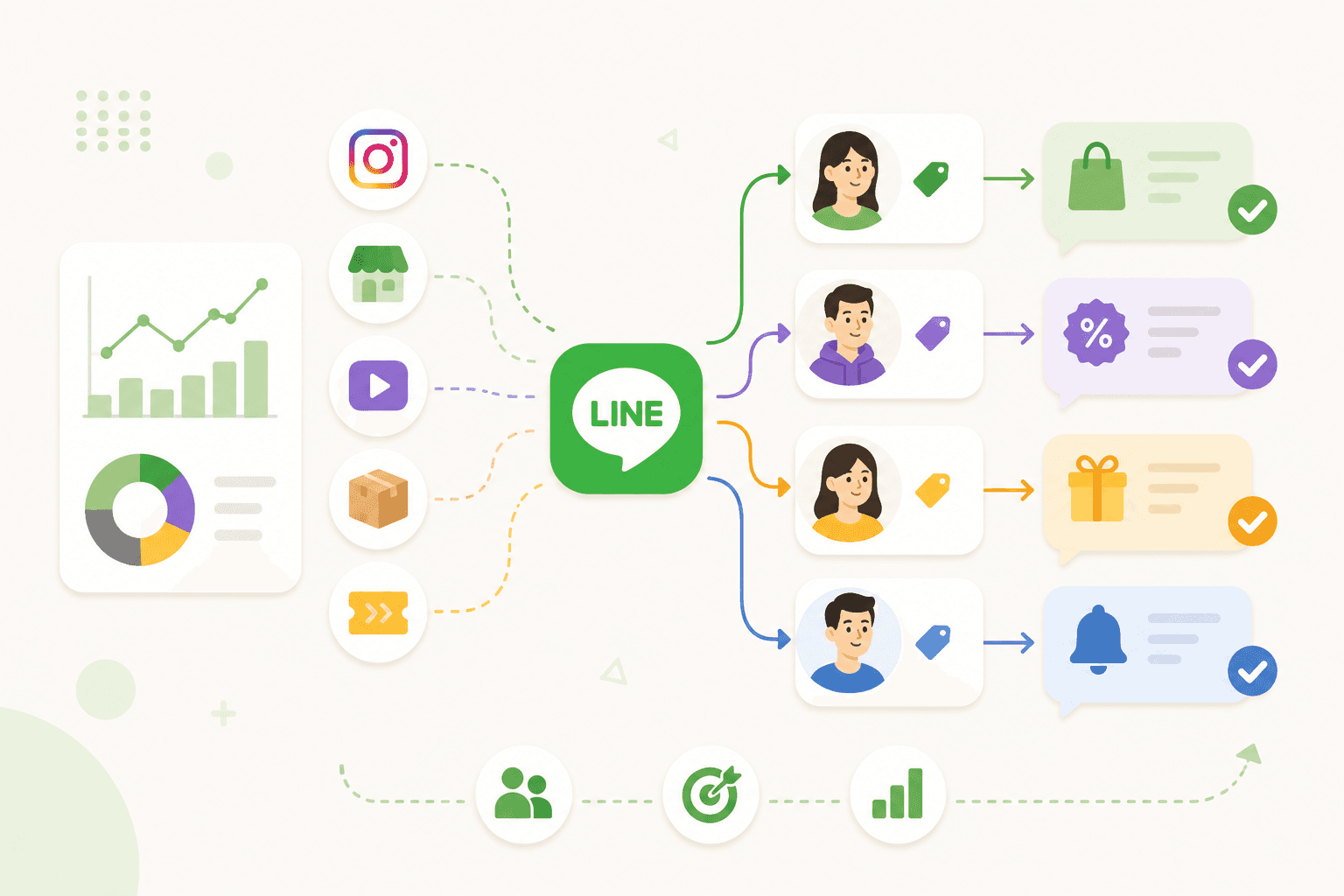
Learn how ecommerce brands can use LINE CRM tags, segmentation, and automation to send smarter messages, improve retention, and reduce broadcast waste.
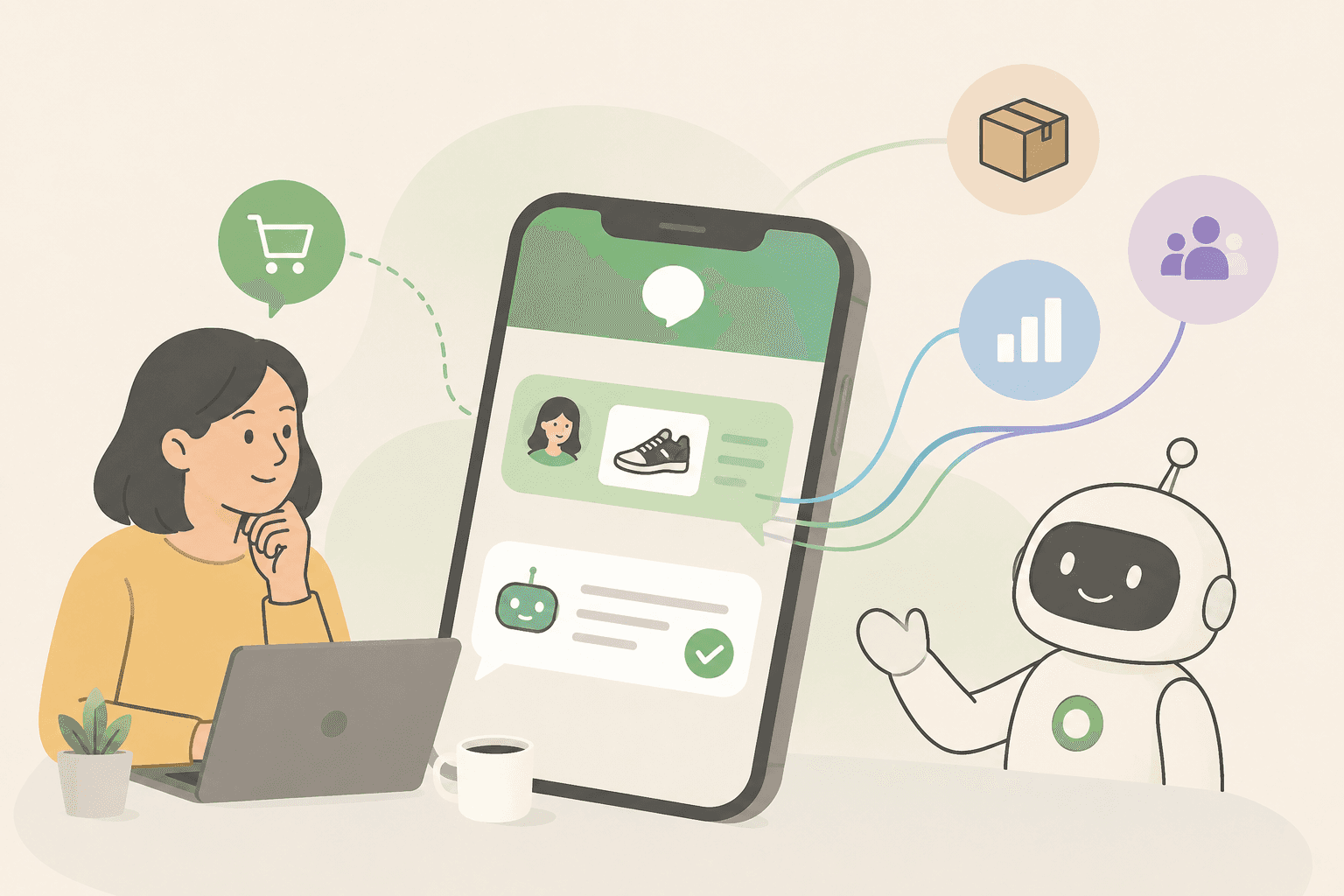
LINE chatbot can't answer cross-channel questions? It's not a vendor problem — it's a data boundary. Use Ezily's Visibility Layers framework to diagnose.
LINE Mini App is changing how Taiwan e-commerce brands interact with customers. This article breaks down five major shifts, three key opportunities, and how Ezily Touchpoints helps brands launch LINE Mini App experiences faster.