Technology
LINE Chatbot Not Smart Enough? Diagnose Where You're Stuck With the Visibility Layers Framework
LINE chatbot can't answer cross-channel questions? It's not a vendor problem — it's a data boundary. Use Ezily's Visibility Layers framework to diagnose.
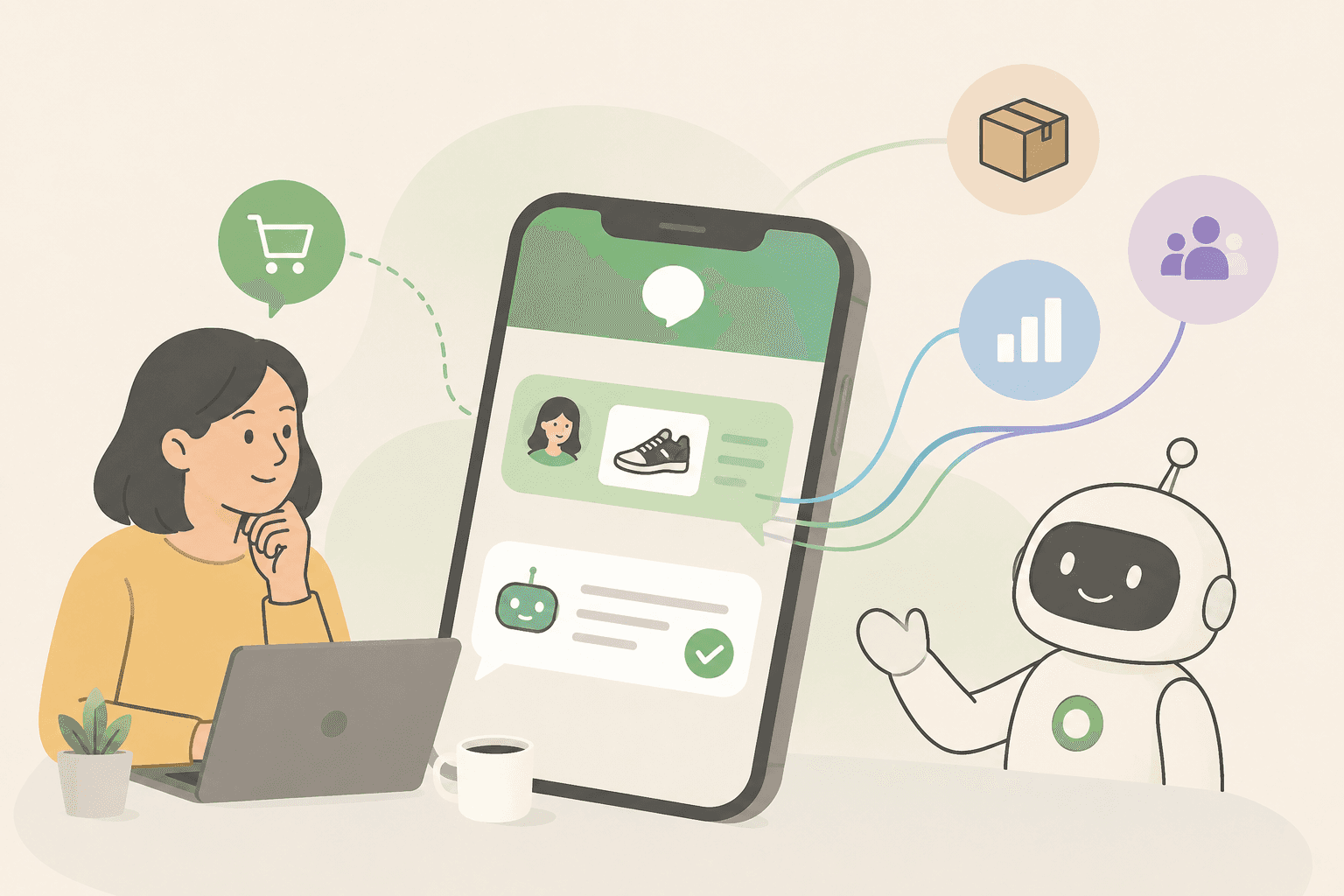
Your LINE follower bought a pair of sneakers on Shopee yesterday. Today she messages your LINE Official Account: "Got these in US9? I want a second pair as a gift — can the two ship together?"
Your LINE chatbot replies: "Please contact our store for stock availability." Or worse — "I can't answer that."
The chatbot isn't dumb. It just can't see your Shopee orders, and it can't see your real-time inventory.
The real LINE chatbot battleground in 2026 isn't FAQ auto-reply anymore — LINE shipped that as a native feature in November 2025. The question that actually matters now is: what data can your chatbot see? This article uses the Chatbot Visibility Layers framework to help you diagnose where you're stuck, and whether your next move should be a tool upgrade or a data architecture upgrade.
3 takeaways
LINE's official AI Chat Bot (Beta), launched in November 2025, makes FAQ auto-reply a built-in feature of the Chat Advanced Plan (NT$100/month). It's no longer a differentiator for third-party chatbot vendors.
Chatbot Visibility Layers (an Ezily framework) — Layer 1: visibility limited to FAQ documents you've uploaded; Layer 2: visibility into a single channel's orders and member data; Layer 3: real-time cross-channel visibility (orders, inventory, ad interactions, customer 360).
Most Taiwan e-commerce brands sit at Layer 2 and can't answer questions like "did my Shopee order ship?" The real upgrade isn't switching chatbot vendors — it's adding a cross-channel data infrastructure layer behind whatever chatbot front-end you already have.
Why You Need to Rethink LINE Chatbot in 2026
Because LINE itself just moved the starting line.
In November 2025, LINE Official Account launched the AI Chat Bot (Beta), bundled with the Chat Advanced Plan — the value-add tier LINE introduced in March 2025 at NT$100/month, which extends chat history, raises tag caps, and adds Notes backup (source: LINE Biz-Solutions official announcement). Upload a PDF, a URL, or an image, and the AI builds FAQs and auto-replies inside the chat. No integration work, no code, no third-party vendor fee.
The implication: AI FAQ auto-reply is table stakes from 2026 onward, not a competitive edge. Brands that have been paying NT$3,000–10,000/month to a third-party chatbot vendor just for FAQ automation — that line item is now baseline LINE functionality.
What actually separates a good chatbot from a bad one now is data visibility: what your chatbot can query.
Chatbot Visibility Layers: Which Layer Are You Stuck At?
Chatbot Visibility Layers is the diagnostic framework Ezily uses to map LINE chatbot options for Taiwan e-commerce brands. It sorts them not by features or price, but by what data the chatbot can actually access. Higher isn't always better — the right layer depends on your operational reality.
Layer | Data Visibility | Typical Solution | Monthly Cost Anchor |
|---|---|---|---|
Layer 1 | Your uploaded FAQ documents only | LINE's native AI Chat Bot (Beta) | NT$100+ (Chat Advanced Plan) |
Layer 2 | Single-channel order/member data | Crescendo Lab, Omnichat, Super 8, BotBonnie, Chatisfy, etc. | NT$900–39,800+ |
Layer 3 | Real-time cross-channel data (orders, inventory, ad interactions, customer 360) | Cross-channel data layer + any chatbot front-end | Scales with architecture |
Layer 1: LINE's Native AI Chat Bot (Beta) — What It Can and Can't Do
What it can answer: the FAQ content you've uploaded. Drop in business hours, return policies, and product spec sheets — the AI builds the Q&A structure itself and auto-replies to relevant questions in the chat. LINE also flags suggested FAQ updates based on real user interaction patterns (source: LINE Official Account Help Center).
What it can't answer:
Anything that changes in real time (live inventory, order status, member points)
Cross-channel context (Shopee orders, web store cart contents)
Anything that requires a database query
Who it fits: brands with high AOV, low SKU count, and customer service queries that are mostly policy or spec questions — think course providers, appointment-based services, and small luxury catalogs. The signal it fits you: 80%+ of your customer service messages are repetitive FAQ-style questions.
Who it doesn't fit: multi-SKU e-commerce, brands with real-time inventory pressure, and any operation where customers routinely need order status.
Layer 2: Vendor Chatbot — What's the Real Limit?
Layer 2 is where most Taiwan brands sit today. Crescendo Lab (漸強實驗室), Omnichat, Super 8, BotBonnie, and Chatisfy are LINE technology partners offering segmentation, tag management, gamification modules, and customer journey design. Functionally, they go well beyond Layer 1.
Their actual business value is turning conversation traffic into orders. Omnichat's 2022 retail conversational commerce report puts chatbot-triggered cart re-engagement at 11.35% conversion, OMO (online-merge-offline) conversational sales at 7.14%, and personalized LINE welcome messages at 7.21% (source: Omnichat 2022 retail conversational commerce report).
But Layer 2 shares a common ceiling: its data visibility usually stops at whichever channel the vendor integrated with.
Here's the scenario playing out every day. Your brand runs a Shopee flagship store, a Shopline web store, and a LINE Official Account. A customer orders on Shopee yesterday, then messages you on LINE today: "where's my order?" Your Layer 2 chatbot is wired to your web store's order system, not Shopee. So it can't answer.
This isn't a vendor effort problem. Most Layer 2 vendors default to a "LINE + one e-commerce platform" integration pattern. Your customers don't care about that technical boundary. They just know they asked you in LINE and expect you to know.
Layer 3: Cross-Channel Data Layer — Why Your Chatbot Needs It
A cross-channel data layer is the data infrastructure that unifies sales, inventory, customer, and ad data from different systems into one queryable layer. It's not another chatbot vendor. It's the data plumbing that lets any chatbot answer the questions that actually matter.
This layer pulls in:
Shopline / Shopee / MOMO — orders and product data
Real-time inventory (web store + physical stores + warehouse)
Meta Ads / LINE LAP (LINE Ads Platform, LINE's official ad-buying system) — campaign interaction data
POS — in-store purchases
Customer 360 view — a single profile combining the same customer's interactions, transactions, and preferences across every channel
With this layer in place, any chatbot front-end (LINE's native bot, Omnichat, or otherwise) can finally answer questions like:
"Did the order I placed on Shopee yesterday ship?" → chatbot queries the Shopee orders API directly
"Do you still have this shoe in my size?" → chatbot checks real-time inventory across channels
"Can my web store order ship together with my Shopee one?" → chatbot cross-references both order records
This is what Ezily actually does. Ezily isn't another LINE chatbot vendor. It's the data layer that unifies Shopline, Shopee, Meta Ads, POS, and member history into one place your chatbot can query in real time. When a customer asks "did my Shopee sneakers ship?", the bot runs an actual database query instead of falling back to "please contact customer service."
Who it fits: brands operating across more than one platform (web store + at least one marketplace), OMO operators with physical stores, and any brand whose customer LTV is high enough that failing cross-channel questions costs real revenue.
5-Question Self-Diagnostic: Which Layer Is Your Chatbot Stuck At?
Run through these five:
When a customer asks in LINE "did last week's order arrive?", can your chatbot answer directly?
When a customer asks "how many US9s do you have in this shoe?", does your chatbot query live inventory, or give a canned response?
Can your LINE chatbot see items the customer bought on Shopee?
Can your chatbot tailor messages based on the customer's Meta Ads interaction history?
Can LINE interaction data write back to your member database in real time?
Zero "yes" → You're at Layer 1, or you haven't started using a chatbot yet.
2–3 "yes" → You're at Layer 2, stuck at the single-channel data boundary.
4–5 "yes" → You're at Layer 3.
LINE Chatbot Underperforming? Change Vendors, or Change Architecture?
If you're at Layer 2 and the chatbot still feels underwhelming, the issue isn't that you picked the wrong vendor. The entire market sits behind the same data boundary.
Switch to another Layer 2 vendor and you'll get a slightly different feature mix and maybe a lower monthly fee. But when a customer asks "did my Shopee order ship?", the new vendor will fail the same way.
The real upgrade path is to keep whatever chatbot front-end you already use (LINE's native bot, Crescendo Lab, Omnichat, anything) and add a cross-channel data infrastructure layer behind it. Omnichat's CEO made the same argument in an early-2026 column: the industry is shifting from "chatbots that talk" to "AI Agents that do things." The prerequisite for "doing" is access to the data the task requires (source: Omnichat AI Chatbot strategy column). LINE itself, at LINE BIZ CONVERGE 2025 in December, previewed the LAP AI Agent rolling out in phases across Q1 2026 (source: LINE BIZ CONVERGE 2025 recap). AI Agents will become the norm. But an AI Agent without a cross-channel data layer is still just a prettier Layer 1 or Layer 2.
Ezily is that data infrastructure.
FAQ
Q1: What's the difference between LINE's native AI Chat Bot (Beta) and a third-party chatbot vendor?
Layer 1 (LINE native) only answers from FAQ documents you've uploaded; it costs NT$100/month via the Chat Advanced Plan. Layer 2 (third-party vendors like Crescendo Lab, Omnichat, Super 8, BotBonnie, Chatisfy) adds segmentation, tagging, gamification modules, customer journey design, and other marketing functions at NT$900–39,800+/month — but data visibility usually stops at the single channel they've integrated with. The two layers solve different problems.
Q2: Why can't my chatbot vendor answer cross-channel order questions?
Because most Layer 2 vendors default to a "LINE + one e-commerce platform" integration pattern. Your Shopee orders, MOMO orders, and POS sales data sit outside their data visibility. This isn't a bug — it's a shared architectural choice rooted in their integration priorities, not a technical limitation.
Q3: Will switching to a different LINE chatbot vendor solve the data visibility problem?
Usually not. You'll get a slightly different feature mix in another Layer 2 tool, but the data boundary stays. The real upgrade is adding a cross-channel data layer (Layer 3) behind your existing chatbot, so any front-end can query Shopline, Shopee, POS, inventory, and the customer 360 view in real time.
Q4: Do small brands need Layer 3?
Not always. If you operate on a single platform with a limited SKU set and 80%+ of your customer service is repeat FAQs, Layer 1 (LINE's native AI Chat Bot Beta at NT$100/month) plus light use of Layer 2 is enough. The ROI on a cross-channel data layer is clearest for brands running multiple platforms, with real-time inventory pressure, and an OMO footprint.
Q5: Will LINE's upcoming LAP AI Agent change this architecture?
It will make the chatbot front-end smarter, but it won't magically solve data visibility. The prerequisite for an AI Agent to actually "do" anything — pull order status, push a coupon, process a return — is still access to that data. AI Agents sharpen this fight; they don't end it. LAP AI Agent rolls out in Q1 2026 in three phases: Campaign, Creative, and Report Agents.
Q6: How is Chatbot Visibility Layers different from the existing "LINE Chatbot Tool Comparison" articles already ranking?
Most existing comparison articles start from "which vendor should I pick?" — they assume your problem is choice selection. Chatbot Visibility Layers starts from "what data can your bot actually query?" Layer 2 vendors are similar on that axis; the differences are pricing and feature combinations, not data visibility boundaries. Switching vendors doesn't solve a cross-channel data problem.
Related articles
Our platform is designed to empower businesses of all sizes to work smarter and achieve their goals with confidence.
When researching Shopify Taiwan case studies, brand owners should look beyond design, apps, and checkout. This guide explains how Taiwan ecommerce brands can turn Shopify traffic into LINE friends, customer intent signals, and repeat engagement.

Learn how ecommerce brands can use LINE CRM tags, segmentation, and automation to send smarter messages, improve retention, and reduce broadcast waste.
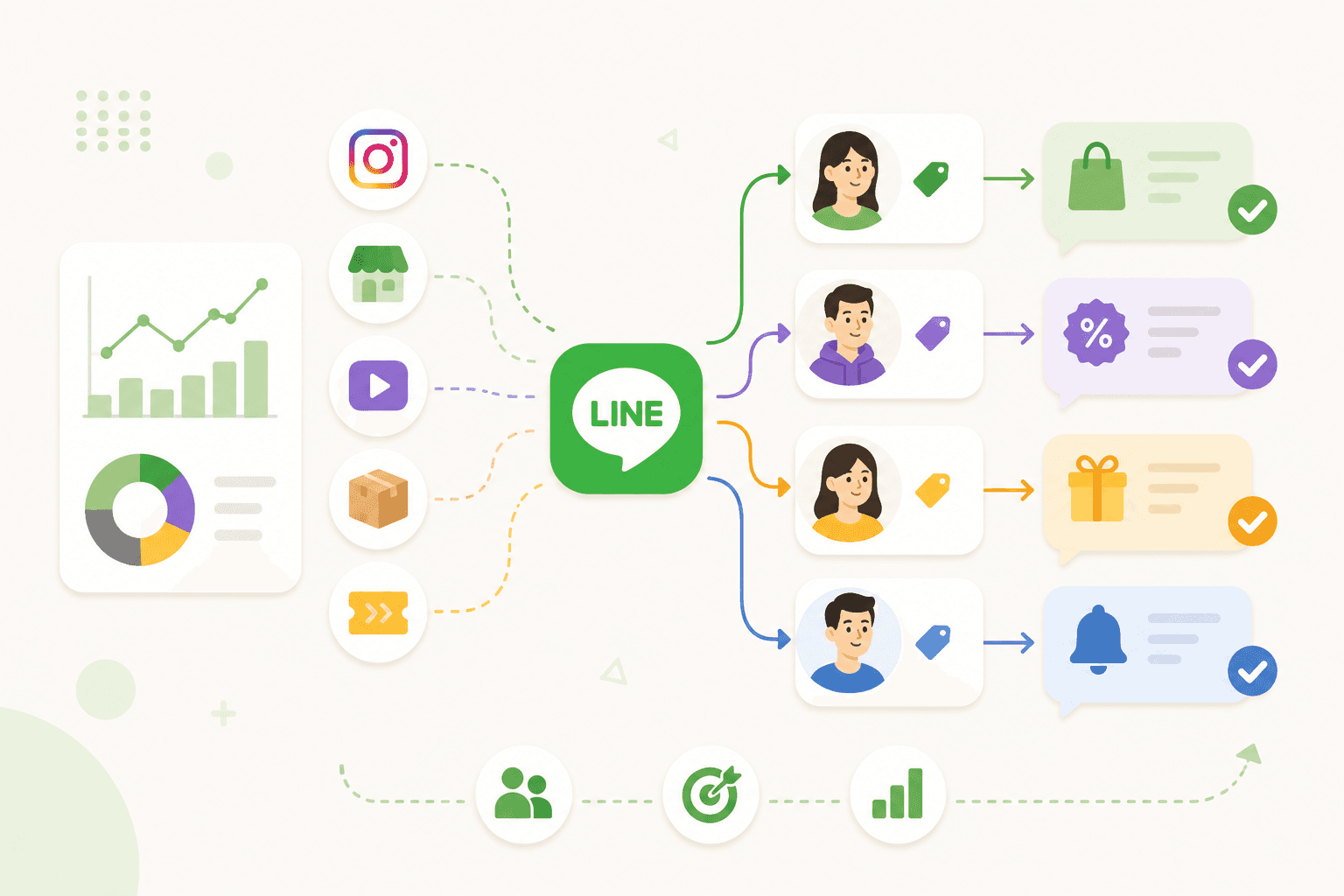
LINE Mini App is changing how Taiwan e-commerce brands interact with customers. This article breaks down five major shifts, three key opportunities, and how Ezily Touchpoints helps brands launch LINE Mini App experiences faster.