Technology
LINE Mini App for E-commerce: Five Major Shifts for Taiwan’s Brand E-commerce
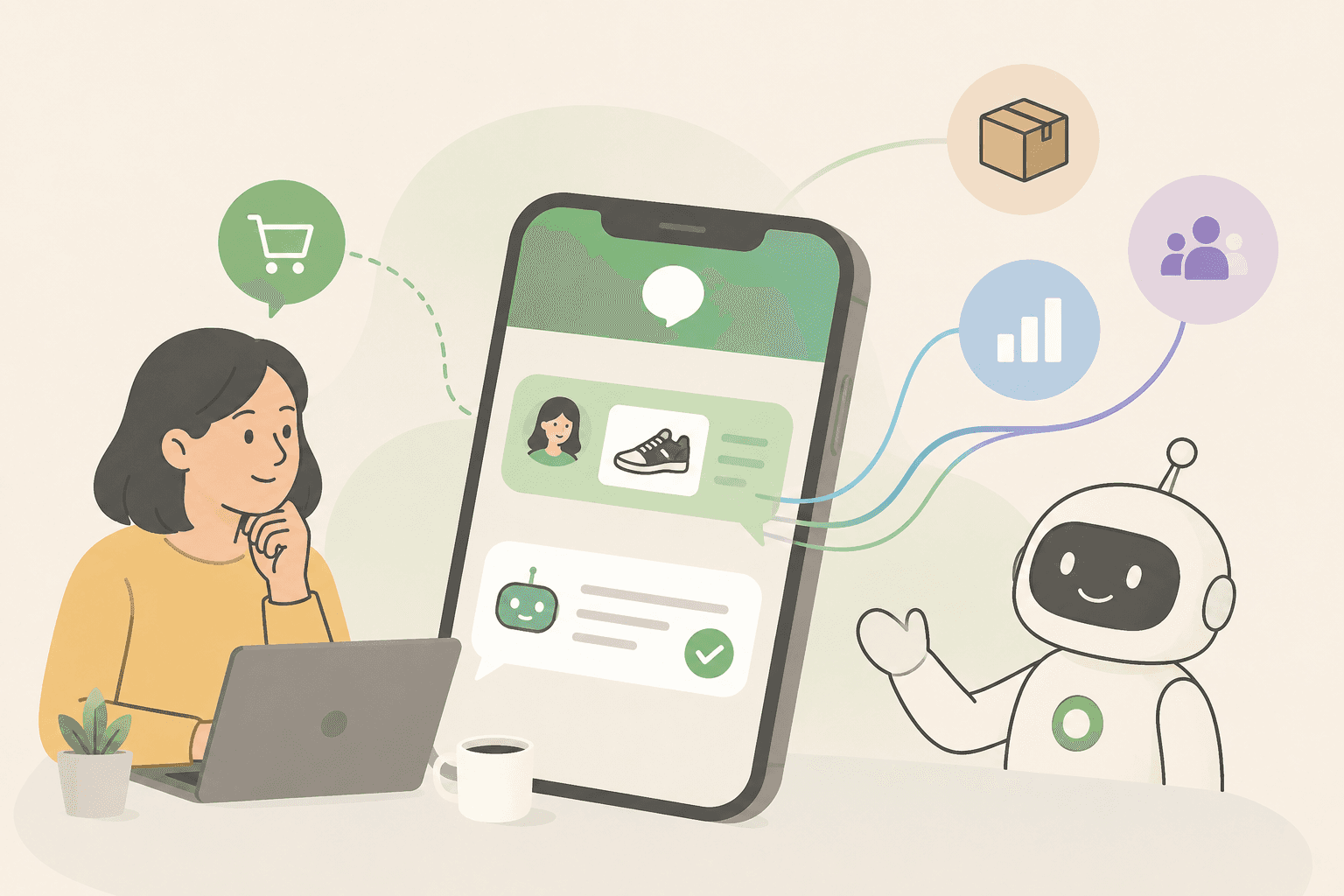
LINE Mini App is changing how Taiwan e-commerce brands interact with customers. This article breaks down five major shifts, three key opportunities, and how Ezily Touchpoints helps brands launch LINE Mini App experiences faster.
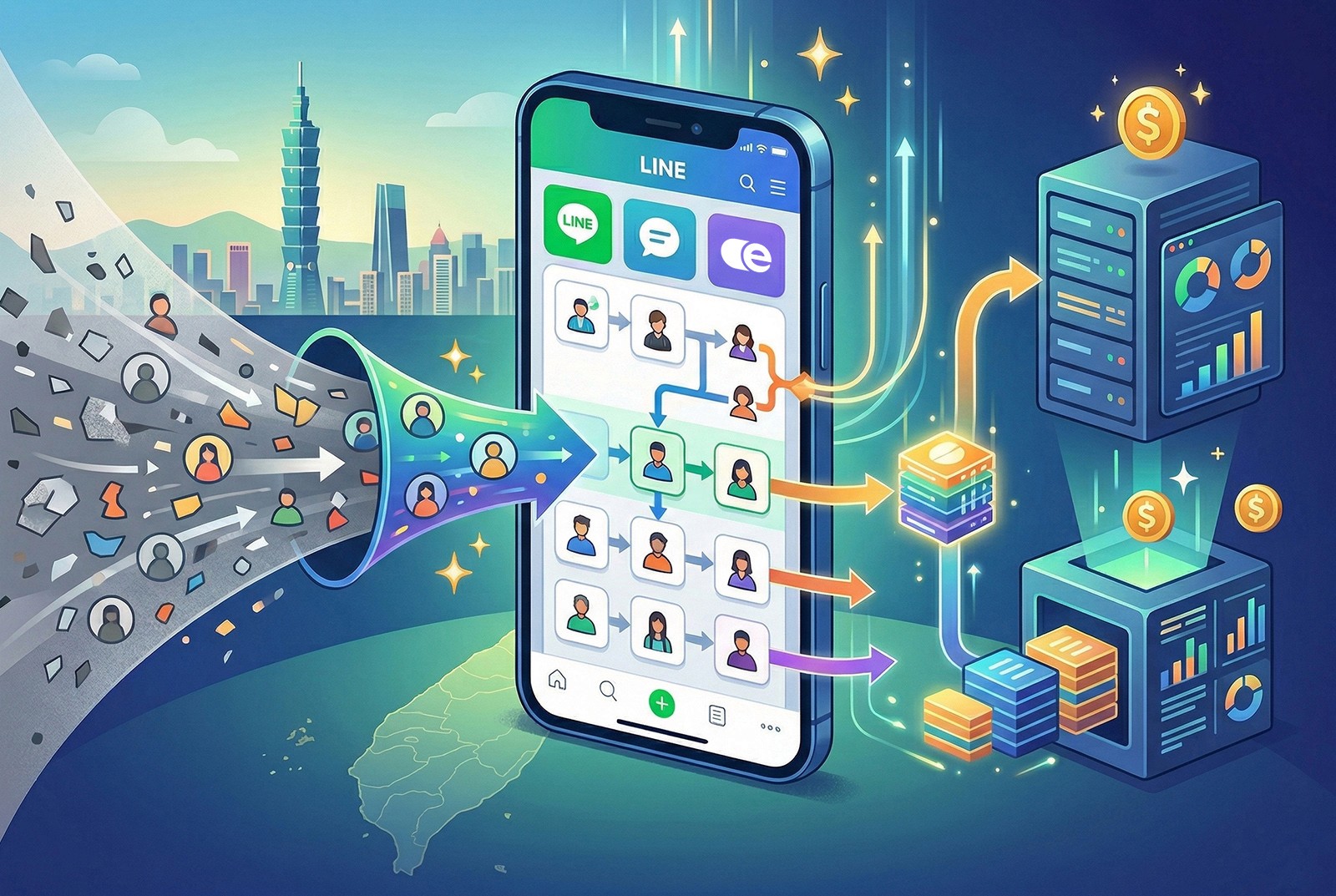
If you have worked in Taiwan’s brand e-commerce space for more than a decade, one thing becomes very clear:
Most brands do not actually lack traffic. They do not lack tools either. What usually holds them back is the way they manage customer interaction.
Many brands are good at running ads, building social content, pushing campaign periods, and driving people to their website or LINE Official Account. The real question is what happens after that. Can the brand keep those visitors engaged, understand them better, segment them properly, and eventually turn them into a member asset the business can keep building on?
That is why LINE Mini App matters so much for Taiwan’s brand e-commerce market.
Key takeaway: LINE is moving beyond messaging and into a much more central role in interaction, membership, service, and long-term customer relationships.
A channel that mostly functions as a push-notification tool usually delivers exposure and short-term response. A channel that can also support interaction, capture data, and guide a next step creates a very different kind of value. That is the point where it starts becoming a real brand asset.
In this article, I want to look at LINE Mini App from the perspective of someone who has spent years helping brands grow their e-commerce business. We will break down five major shifts that LINE Mini App is creating in the way Taiwan brands interact with customers, along with three opportunities that matter most right now.
What Is LINE Mini App, and Why Should E-commerce Brands Revisit It Now?
At its core, LINE Mini App is a lightweight web app that runs inside LINE. For consumers, that means they do not need to download a separate app or leave LINE to complete a service flow or interaction.
If you look at it only from a technical point of view, it is easy to underestimate.
What matters here is the business value.
From a brand management perspective, LINE Mini App fills a gap that many Taiwan brands have been struggling with for years.
On one side, you have the brand website. The website still matters. It is the main sales destination, the central home for product information, and the core owned channel for the brand. But websites also have limits. Most visitors are not coming back constantly, and interaction depth is often shallow.
On the other side, you have the brand’s own app. An app can support a much richer experience, but for most brands, download friction is high, development is expensive, and long-term usage habits are hard to build.
LINE Mini App sits in the middle.
It is lighter than a native app, but much more flexible than a simple landing page. It gives brands a space to capture interaction quickly, without asking customers to take on too much friction.
From a consultant’s perspective, the most important factor here is timing.
Most brands in Taiwan have already reached a new phase. Everyone understands that membership and retention matter. The problem is that older tactics are no longer enough. Adding more friends, sending more discounts, and chasing open rates alone will not support long-term growth. That is exactly where LINE Mini App starts to become much more relevant.
Shift 1: Customer interaction is becoming a designed flow, not just a message send
Tagline: The next stage of LINE marketing is about designing interactions people actually want to complete.
Let me start with a blind spot I see all the time.
For years, many brands have focused on what to send on LINE, when to send it, how strong the offer should be, and what kind of headline gets the click. Those things still matter, but they are all still about optimizing the push.
The limitation of push messaging is not that it stops working completely. The limitation is that it rarely builds a real relationship.
A customer receives a message, looks at it, maybe clicks once, and moves on. That does not mean the brand has created meaningful engagement. In many cases, it simply borrowed a few seconds of attention.
With LINE Mini App, brands finally have a stronger way to turn the unit of interaction from a single message into a complete task flow.
That task flow can be simple or highly strategic. For example:
a new customer onboarding quiz
a product needs assessment
a style or fit matching flow
membership binding
event registration
in-store check-in
post-purchase registration
appointment booking
Once a brand starts designing around these kinds of flows, the relationship changes.
The customer is no longer just receiving information. They are completing something inside a brand-designed experience. That completion has much more value than a simple open or click.
For the brand, the biggest shift is that there is now a way to move people into a next step. You can see what they completed, what they prefer, where they got stuck, and what they are interested in. That is the kind of input that actually improves future retention and segmentation.
One-line summary: The logic of LINE is gradually shifting from content distribution to interaction design.
Shift 2: Brands have a better chance to capture traffic before it disappears
Tagline: Many brands already have traffic. What creates separation is the ability to hold onto it.
If you have been in brand e-commerce long enough, you know this painful reality:
A lot of traffic does come in. It just disappears quickly.
People click an ad, glance at the page, and leave. Social content performs well, but does not always lead to a next step. A user adds the brand as a LINE friend, but if the account only sends generic pushes, that person becomes inactive or blocks the account soon after.
Brands have known this problem for a long time. What they lacked was a place to continue the interaction with low friction and enough flexibility to build on it.
That is the role LINE Mini App fills.
Its most practical value is that it lowers the cost of entry for the next interaction. The customer does not need to download a new app, switch to an unfamiliar platform, or build a new behavior from scratch. If they are already in LINE, the brand has a better shot at extending the journey from that moment.
This matters even more in Taiwan, where LINE is already a high-frequency platform. The real strategic question becomes: can you give the customer a worthwhile next step while they are still willing to pause and engage?
That shift changes how brands think about traffic.
For a long time, the default mindset was traffic equals conversion opportunity. With LINE Mini App used well, traffic can first be captured, then nurtured, then converted.
That rhythm is much closer to how people actually buy.
Not everyone will purchase the first time they discover your brand. But many people will stay, interact, and eventually become high-value members if the brand gives them the right next step at the right time.
One-line summary: LINE can become the environment where traffic turns into an ongoing customer relationship.
Shift 3: Brands can start collecting customer data that is actually useful for growth
Tagline: The earlier a brand understands the customer, the better its segmentation and conversion strategy will be.
If you ask me what has been missing from many brands’ LINE strategy over the past few years, I would put it this way:
They can see the numbers, but they cannot really see the customer.
Friend growth, open rates, and click-through rates are all easy to track. But these are surface-level metrics. On their own, they do not answer the questions that matter most.
What is this person actually looking for? Where are they in the buying journey? What category are they most interested in? Are they exploring content, collecting an offer, or getting close to purchase?
Without that kind of context, segmentation stays shallow and messaging becomes repetitive.
One of the biggest strategic advantages of LINE Mini App is that it allows brands to capture structured customer signals through interaction.
You are no longer only seeing whether someone clicked. You start seeing how they choose, what they prefer, which step they completed, and which need state they fall into.
In a very common e-commerce scenario, a well-designed product recommendation quiz can help a brand understand:
preferred product type
budget range
use case or lifestyle context
size or specification needs
interest tags
whether the person is new to the brand
The value of this data is not just that it exists. The value is that the brand can now build better segmentation logic around it.
Any experienced operator knows this: strong retention does not come from sending more messages. It comes from showing the right content, recommendation, or experience to the right person at the right time.
One-line summary: LINE has the potential to become the brand’s frontline system for understanding customers earlier and more clearly.
Shift 4: LINE is moving closer to the front of the brand journey and becoming an experience entry point
Tagline: The earlier LINE appears in the customer journey, the more valuable it becomes as a long-term brand asset.
Over the years, I have seen many brands do a decent job with LINE and still leave a lot of value on the table.
The common issue is that LINE is still positioned too far downstream.
It gets used for customer service, coupons, event notifications, and promotional reminders. All of those uses are valid. But when LINE stays confined to those roles, it is difficult for it to become something strategically meaningful for the brand.
LINE Mini App changes that by moving LINE closer to the front of the customer journey.
That means LINE can start showing up much earlier than the final purchase reminder or post-sale message.
Brands can now think more broadly:
Can new customers learn about the brand through guided interaction?
Can shoppers narrow down their product choices through lightweight prompts?
Can adding the account as a friend lead into a stronger brand experience, not just a coupon?
Can post-purchase education, care content, support, and repurchase guidance all live in one connected path?
When a brand starts using LINE this way, it stops being just a channel managed by the marketing team. It becomes an interface the brand uses to build familiarity, trust, and reasons to return.
Those outcomes may not look as dramatic as a short-term campaign spike, but over time they tend to matter far more.
One-line summary: LINE deserves a much more central place in how brands build ongoing customer relationships.
Shift 5: OMO is becoming more practical because the experience can be connected more naturally
Tagline: OMO execution often comes down to how many breaks exist across the customer journey.
If you have ever worked with retail brands, this will feel familiar.
Everyone talks about OMO. Very few brands execute it smoothly. The challenge usually comes down to fragmentation.
A customer discovers the brand online, then faces a completely different flow in-store. Membership enrollment is one system. Event check-in is another. Coupon redemption is another. After-sales service lives somewhere else entirely. Internally, each function may have its own tool. From the customer’s perspective, the journey feels disconnected.
LINE Mini App makes OMO much more actionable because it provides a familiar, relatively unified layer of interaction.
That layer matters because it can bring different customer actions into one more consistent environment. When someone walks into a store, they do not just scan to add the brand account. They can continue the journey through the same LINE experience by opening a member card, filling out a needs form, joining an event, claiming an offer, browsing product recommendations, or registering for after-sales support.
On the surface, this may look like an operations improvement. In reality, it is a customer journey redesign.
That matters a great deal in Taiwan because many brands do not grow through online ads alone. Growth often comes from making online and offline touchpoints reinforce one another.
If LINE can serve as the bridge between these touchpoints, brands gain a stronger way to turn separate interactions into one continuous relationship path.
One-line summary: OMO is increasingly becoming a customer interaction system that brands can actively design and improve.
Three Key Opportunities for Taiwan’s Brand E-commerce Market
These five shifts may look like interaction upgrades on the surface, but from a brand growth perspective, they open up three very important opportunities.
Opportunity 1: Turn traffic that would have disappeared into a member asset the brand can keep building
A lot of brands hit a growth ceiling because their front-end acquisition is working, but their back-end capture is weak.
They run ads, build content, and launch campaigns, yet the traffic leaves and all that remains is a report full of impressions.
LINE Mini App creates a practical opportunity to bring those visitors into an environment where the relationship can continue.
Tagline: Once a brand captures the person, it creates room for retention, segmentation, and conversion later.
This is a very practical form of value.
Not every visitor will buy immediately. But once a person completes a meaningful interaction, they become much more likely to enter a relationship the brand can continue developing.
Opportunity 2: Turn interaction into data, and turn that data into operating leverage
Tagline: Data creates value when it helps the brand make the next step more precise.
Every experienced operator knows that the most expensive thing is not the tool itself. It is running the business with incomplete understanding.
When the brand does not know where the customer is in the journey, what they care about, or what should happen next, the result is usually the same: repeated pushes, repeated campaigns, and generalized messaging.
LINE Mini App gives brands a way to collect more actionable interaction data and use it to improve segmentation, recommendations, content planning, and conversion strategy.
Once that system starts working, the efficiency gap becomes meaningful. The brand stops focusing only on broader reach and starts building better accuracy.
Opportunity 3: Build a branded interaction layer without taking on a heavy development project upfront
Tagline: Starting smaller, moving faster, and validating early usually fits brand reality much better than building everything at once.
Many brands already know they need a stronger membership experience. The issue is usually the same: projects get too heavy, too slow, or too resource-intensive.
That is one reason LINE Mini App is especially practical for Taiwan brands. It creates a more realistic path forward. Brands do not need to launch a full native app or commit to a massive development project just to start testing more meaningful interaction flows.
From a consultant’s point of view, this is a major advantage.
Most brands do not need a perfect all-in-one solution on day one. They need to identify which interaction scenario actually works, prove the value, and then expand from there. That path is usually much more aligned with how brands operate in the real world.
The Real Strategic Question: What Business Problem Should LINE Mini App Solve?
Tagline: Brands usually get better results when they define the problem first and choose the tool second.
LINE Mini App does not automatically make a brand better.
No new tool creates growth on its own. The real difference always comes from how the brand defines the problem, designs the interaction, and connects the data back into its operating process.
For that reason, the most important questions for any brand are not just whether to adopt LINE Mini App. The better questions are:
Which part of our traffic is easiest to lose today?
What is the first customer interaction we most need people to complete?
What data gap matters most to our business right now?
What role should LINE play across our customer journey?
Once those questions are clear, LINE Mini App becomes much more than a platform feature. It becomes a tool with real operating value.
Conclusion: LINE Mini App Is Changing How Taiwan Brands Build Customer Relationships
For Taiwan’s brand e-commerce market, the deeper impact of LINE Mini App is not simply that brands now have one more page or one more digital touchpoint.
It is that the logic of customer interaction is changing.
For years, many brands used LINE mainly for message distribution. The brands that move faster from here will use LINE to build interaction flows.
That shift may not look flashy, but it changes the fundamentals: how brands capture traffic, understand customers, build member relationships, segment communication, and connect online and offline experiences.
These are exactly the areas that will define competitive strength for Taiwan brands over the next few years.
Want to Launch Your Own LINE Mini App Faster?
If your brand is thinking about how to bring high-risk drop-off traffic into LINE, build stronger customer interaction inside LINE, or test which LINE Mini App scenarios make the most sense for your business, Ezily Touchpoints is a very practical place to start.
Ezily Touchpoints is a platform that helps brands launch LINE Mini App experiences faster. Brands can build touchpoints like new customer onboarding, interactive quizzes, product recommendation flows, campaign pages, and membership interactions inside LINE without taking on the full burden of building everything from scratch.
Just as importantly, brands do not need to start with an oversized project. You can begin with one interaction scenario that is worth validating, launch quickly, test quickly, and improve quickly while building real customer interaction assets over time.
If you want to learn how Ezily Touchpoints can help your brand launch LINE Mini App experiences faster, let’s talk.
Related articles
Our platform is designed to empower businesses of all sizes to work smarter and achieve their goals with confidence.
When researching Shopify Taiwan case studies, brand owners should look beyond design, apps, and checkout. This guide explains how Taiwan ecommerce brands can turn Shopify traffic into LINE friends, customer intent signals, and repeat engagement.

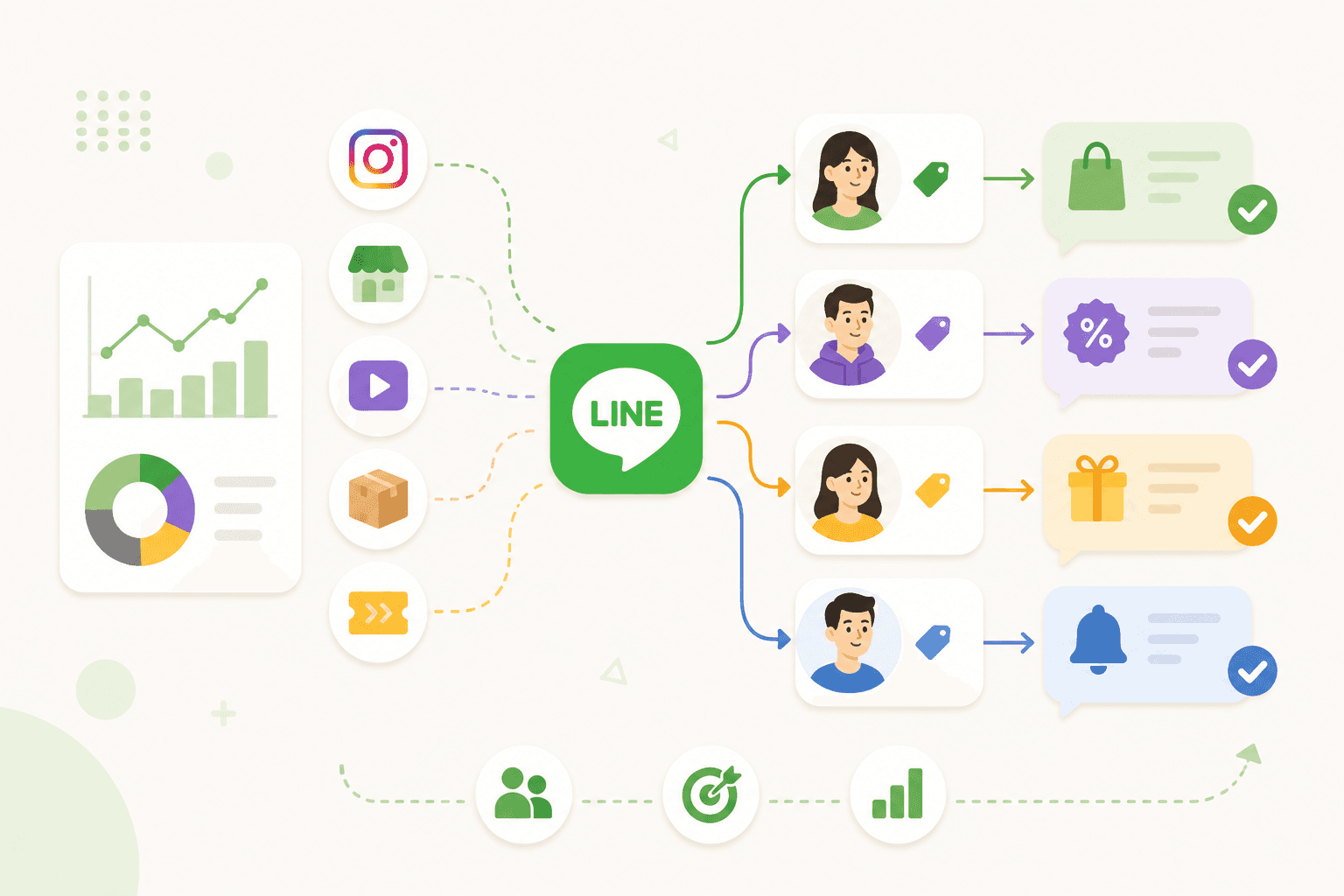
Learn how ecommerce brands can use LINE CRM tags, segmentation, and automation to send smarter messages, improve retention, and reduce broadcast waste.
LINE chatbot can't answer cross-channel questions? It's not a vendor problem — it's a data boundary. Use Ezily's Visibility Layers framework to diagnose.