Technology
How to Increase E-commerce Repeat Purchases: 5 Things Brands Need to Rethink About Lead Nurturing and Retention
Want to improve ecommerce repeat purchases without relying on discounts alone? This guide breaks down lead nurturing, repeat purchase strategy, CRM segmentation, and customer retention paths that brands should focus on now.
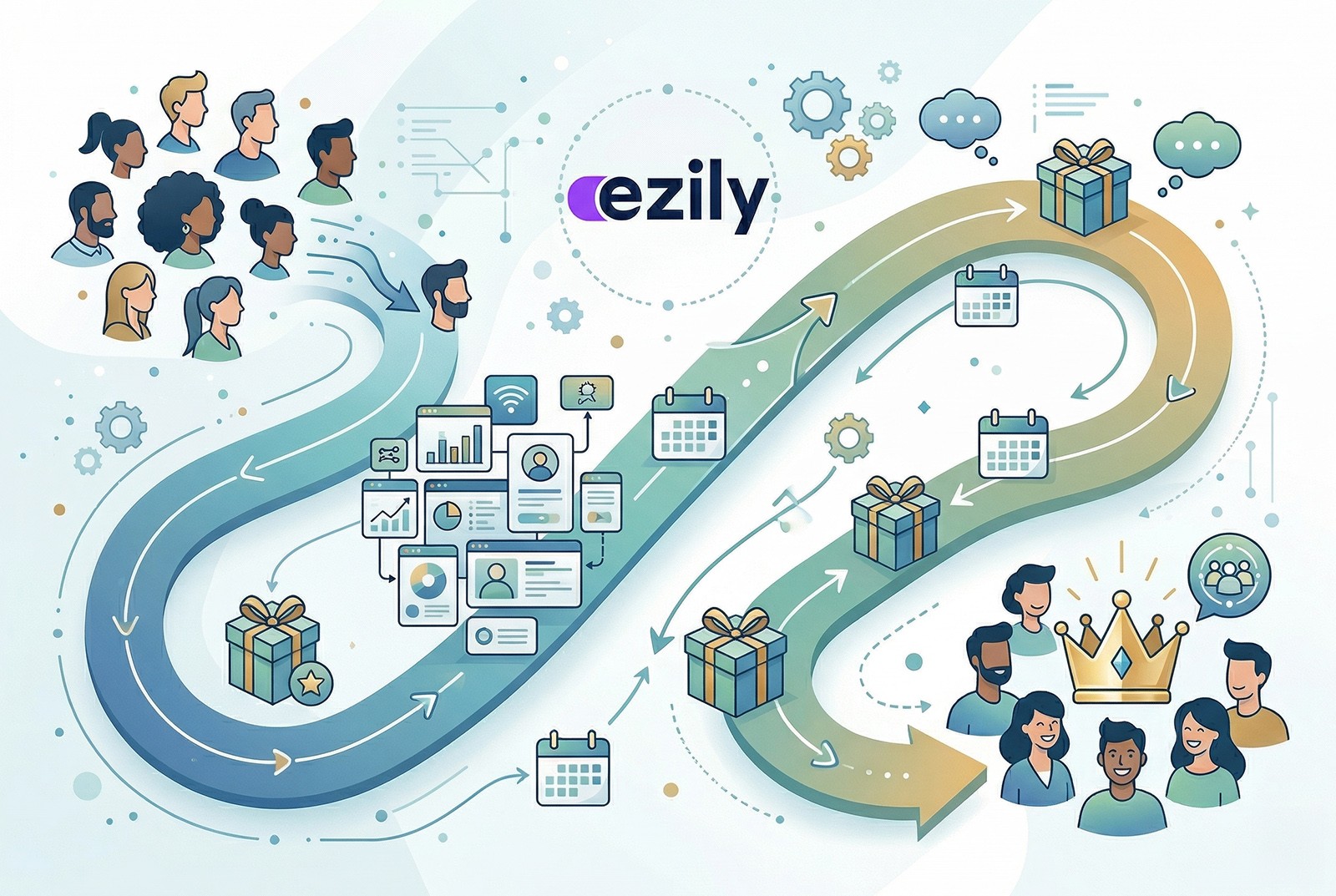
When most e-commerce brands talk about growth, the first things that come up are usually traffic, paid ads, conversion rate, and campaign revenue.
Those things still matter. But if you have spent enough time building a brand, you eventually realize something pretty simple: what determines whether a brand can keep growing is not just how well this month’s campaign performed. It is whether you can keep customers, keep learning about them, and keep the relationship going.
That is exactly why more brands have started paying attention to two topics again: e-commerce repeat purchase and e-commerce lead nurturing.
On the surface, these sound like two separate topics. In practice, they are really two parts of the same system.
If you are not capturing the right leads up front, you will not have a healthy pipeline of first purchases or repeat purchases later. And if you do not extend the customer relationship after the first order, then all that traffic does is force you to keep paying for the same kind of new customer over and over again.
If I had to put it as directly as possible, I would say this:
The future of e-commerce is not about who gets the first order fastest. It is about who can turn traffic into customer assets, and then turn those customer assets into long-term revenue.
If you do not keep them, you do not get the repeat purchase.
In this article, I want to share five things I believe e-commerce brands should seriously rethink right now from a practical brand-building perspective.
1. Leads matter, but the real issue is not list size. It is whether you are capturing intent and preference signals you can actually use.
A lot of brands say they are doing lead nurturing, but in reality they are mostly trying to get people to add the brand on LINE, subscribe to email, register for membership, or leave contact information somewhere inside the brand’s owned channels.
There is nothing wrong with that. But if that is all you are doing, it is still not enough.
Because getting someone’s contact information does not mean you have actually captured a lead.
A list is not the point. The point is whether you can keep working the relationship.
A lead only becomes valuable when three things are true: you can reach them again later, you know what they care about, and you can tailor the next message or experience based on where they are in the buying process.
If all you have is an email address or a LINE contact, but you do not know what content brought them in, what products they are interested in, whether they are just discovering your brand or actively comparing options, or whether they care most about price, function, style, or use case, then that list quickly becomes a dead list.
What should brands do in practice?
The shift I usually recommend is simple: stop thinking only about lead capture, and start thinking about lead capture plus context.
That means when someone gives you a way to contact them, you should also try to gather one more useful layer of information, whether that is need, preference, interest area, or intended use case.
This does not have to be complicated. You can use a short quiz, a product finder, a simple preference question, click behavior, page views, or campaign participation to start building a better customer profile over time. The goal is not to ask for everything at once. The goal is to gradually build a clearer picture through ongoing interactions.
If you are a skincare brand, that could mean asking one extra question before someone signs up: are you most concerned about hydration, brightening, anti-aging, or sensitivity? If you are an apparel brand, you might start with everyday wear, workwear, date-night styling, fit concerns, or comfort.
You do not need to overengineer this from day one. But you do need to start with the right mindset: a lead is not just a contact record. It is an unfinished buying relationship.
Lead nurturing is not about collecting data. It is about holding onto future demand before it is ready to convert.
2. Repeat purchase should not depend only on promotions. It should come from why customers want to come back.
When brands think about e-commerce repeat purchase, the first tactics that usually come to mind are membership days, discount codes, bounce-back coupons, gift-with-purchase offers, or limited-time promotions.
Those tools are not inherently bad. I am not against promotions. But if your repeat purchase strategy depends entirely on them, what you are usually building is not loyalty. It is price response.
A customer coming back does not automatically mean they believe in your brand. Sometimes it just means the offer happened to be good enough that day.
The kind of repeat purchase brands should actually care about usually comes from something deeper. The customer trusts the product. They remember the brand. They still see value in hearing from you. And when the next need shows up, they think of you before they think of someone else, even if you are not the cheapest option every time.
What should brands do in practice?
I usually suggest thinking about repeat purchase in three layers.
The first is product-cycle repeat purchase. This applies to replenishment or routine categories like supplements, skincare, or food. In that case, the job is not to keep throwing discounts at people. The job is to understand the natural usage cycle and show up again at the right time.
The second is relationship-driven repeat purchase. This is less about asking for the next order immediately and more about staying relevant between purchases. That could mean new product updates, educational content, styling inspiration, category-specific tips, or anything that keeps the brand in the customer’s consideration set.
The third is category-extension repeat purchase. This is not about buying the exact same item again. It is about guiding the customer to the next logical product, whether through cross-sell paths, product pairings, or recommendations based on what they have already bought.
At the end of the day, repeat purchase is not just about asking for another transaction. It is about making the customer feel like this brand still understands me, and it is still worth coming back to.
Repeat purchase is not a discount mechanism. It is relationship continuity.
3. E-commerce brands cannot afford to look only at sales anymore. You also have to look at whether you are actually keeping customers.
A lot of brands still run their monthly reviews around the same set of numbers: revenue, ROAS, ad spend, order volume, average order value, and conversion rate.
Of course those metrics matter. But if that is all leadership looks at, there is a trap that shows up again and again: it looks like the business is growing, but in reality the brand is just spending more money every month to keep buying the same outcome.
That kind of growth is exhausting, and it is fragile. The second acquisition costs go up, platform algorithms shift, or competitors become more aggressive with promotions, performance starts slipping.
That is why brands cannot afford to look only at the final sales number anymore. You also have to look at whether you are actually keeping people.
What metrics should you start paying attention to?
Brands need a broader view of what growth actually means. That includes how many visitors become reachable contacts, whether those contacts come with any usable preference or intent data, how efficiently leads become first-time buyers, whether first-time customers come back within a reasonable time frame, and whether existing customers are contributing a bigger share of revenue over time.
All of those metrics are really trying to answer the same question: are you just selling products, or are you building customer assets?
Revenue shows the result. Customer structure shows the problem.
What should brands do in practice?
Start by looking at performance not just by channel or campaign, but by customer stage. Every month, separate your new customers, first-time buyers, repeat customers, loyal customers, and dormant customers. Pull CRM performance out on its own instead of burying it inside paid media reporting. And for people who gave you their information but never converted, track what happens over the next 30, 60, and 90 days.
Once you do that consistently, the real operating issues inside the business usually become much clearer.
4. Most brands spend all their energy on the first purchase. The real difference comes from what happens after that.
A lot of e-commerce brands put almost all of their effort into first-order conversion.
That is understandable, because getting a new customer and landing the first purchase is the part everyone sees most clearly. But the problem is that many brands only design the journey up to that point.
They have a first-purchase offer, but they have not really thought through what should happen on day 7, day 30, or day 60 after the first order. They have not clearly defined what the next logical product is. And they have not decided when or how to re-engage customers who do not come back.
That is why so many brands end up in the same cycle: they work hard to bring in new customers, but they never build those customers into real repeat buyers.
The real gap is not the first purchase. It is what comes after it.
What should brands do in practice?
The easiest place to start is by mapping four basic paths.
The first is a post-purchase care path. The purpose here is not to force a second order immediately. It is to reduce drop-off. That usually means onboarding content, usage guidance, common questions, or simple follow-up after delivery.
The second is a repeat purchase path. This should follow the natural cycle of your category. It might include replenishment reminders, next-step recommendations, or a progression from entry-level products to more advanced ones.
The third is a loyal-customer path. At this stage, the customer is no longer just buying. They are starting to build preference and identification with the brand. That means what they need is not only promotions, but also better product access, early information, membership recognition, and stronger brand content.
The fourth is a dormant-customer reactivation path. This should not be one generic discount email sent to everyone. Some people dropped off because the timing was wrong. Some forgot about the brand. Others never saw a relevant next step. Those are different problems and should be treated differently.
Once a brand has these four paths in place, retention becomes much more intentional.
5. The next real competitive advantage is CRM and retention capability, not just reach.
In the past, a lot of brands treated CRM as a messaging tool and membership programs as a way to run basic discount offers.
But if you look at e-commerce as a long-term business, the real role of CRM is much bigger than that. CRM is supposed to help a brand say the right thing, at the right time, to the right customer.
CRM is not just a messaging tool. It is the system behind how a brand manages customer relationships.
The key question is not whether a message was sent. The real question is whether customers have been segmented properly, whether the content reflects what different groups actually need, whether the brand understands where each customer is in the journey, and whether each interaction moves the relationship forward.
What should brands do in practice?
Do not make this more complicated than it needs to be. Most brands can start with five simple groups: newly captured leads who have not purchased yet, first-time buyers who have not made a second purchase, stable repeat customers, high-value loyal customers or VIPs, and dormant customers who have not engaged in a while.
Then build different content directions for each group. People who are new and have not purchased yet need trust-building, reassurance, and a reason to place the first order. First-time buyers need help using the product, seeing value, and understanding what should come next. Repeat customers and VIPs need stronger recognition, early access, and a sense that the brand relationship is actually evolving.
A lot of brands want to jump straight into automation. But if the segmentation and content logic are weak, automation just means sending the same irrelevant message more efficiently. Build the logic first. Then automate.
Repeat purchase strategy should look different depending on the category
There is one more mistake brands make all the time: they assume every category should be measured against the same repeat purchase expectation.
That is just not true.
For high-frequency replenishment categories like supplements, skincare, or food, the focus should be on replenishment timing, usage-cycle reminders, bundles, upsells, and membership mechanics that support stable reorder behavior.
For style-driven or curated categories like apparel, accessories, and lifestyle goods, the focus is usually more about ongoing engagement, inspiration, newness, and preference-building over time.
For high-ticket, low-frequency categories like furniture, appliances, or other durable goods, short-term repeat purchase is often the wrong KPI to focus on. What matters more is long-cycle lead nurturing, trust-building before purchase, post-purchase experience, referrals, cross-sell opportunities, and upgrade demand.
So before a brand talks about repeat purchase, it should first ask a better question: what does relationship continuity realistically look like in our category?
Not every brand should chase the same type of repeat purchase.
That question matters more than forcing a generic KPI onto every business.
If you want to act on this now, start with these 6 steps
If you are a founder, e-commerce lead, CRM manager, or growth marketer, I would start with a few simple but high-leverage moves.
First, review every current lead-capture point you have, including your website, email flows, LINE, campaign landing pages, content pages, pop-ups, and events. Ask yourself whether you are collecting only contact information, or whether you are also collecting something useful about need, preference, or purchase stage.
Second, create a basic tagging framework for new leads. Do not overcomplicate it. Source, product interest, use case, and buying stage are already enough to improve communication significantly.
Third, map the journey from first purchase to second purchase. Be specific about what the customer will receive, see, or experience at 30, 60, and 90 days after the first order.
Fourth, add actual retention content for existing customers. Do not let loyal customers hear from you only when there is a promotion. Give them new product information, deeper brand content, stronger membership experiences, and more relevant timing.
Fifth, separate dormant customers from everyone else. They should not sit inside the same messaging pool as active customers, because the reactivation job is different.
Sixth, review customer structure every month, not just revenue. At a minimum, look at new customer mix, repeat purchase rate, revenue share from existing customers, dormant-customer ratio, and the quality of lead growth over time.
If you review those numbers consistently, your mindset starts to shift from chasing short-term sales to building customer assets.
Healthy growth is not just selling more every month. It is keeping more value every month.
Final thought: the real job is not just driving transactions. It is increasing the odds that the brand will be remembered next time.
If you spend enough time in e-commerce, you realize the real competition is not just about who runs more ads or who pushes harder during promotional periods.
The brands that pull away are usually the ones that know how to keep customers, understand them better over time, stay relevant between purchases, and show up again when the next need appears.
So whether you are thinking about e-commerce repeat purchase or e-commerce lead nurturing, the real issue always comes back to the same thing:
Can you turn traffic into customer assets, and then keep building value on top of those assets over time?
What a brand is really trying to build is not just the next sale. It is the next time the customer thinks of you.
If the answer is no, the business stays overly dependent on new customer acquisition, and growth keeps getting harder.
If the answer is yes, then you are not just selling products month to month. You are building a stronger brand foundation that compounds over time.
And that is what e-commerce brands should really be paying attention to right now.
Related articles
Our platform is designed to empower businesses of all sizes to work smarter and achieve their goals with confidence.
Learn how ecommerce brands can use LINE CRM tags, segmentation, and automation to send smarter messages, improve retention, and reduce broadcast waste.
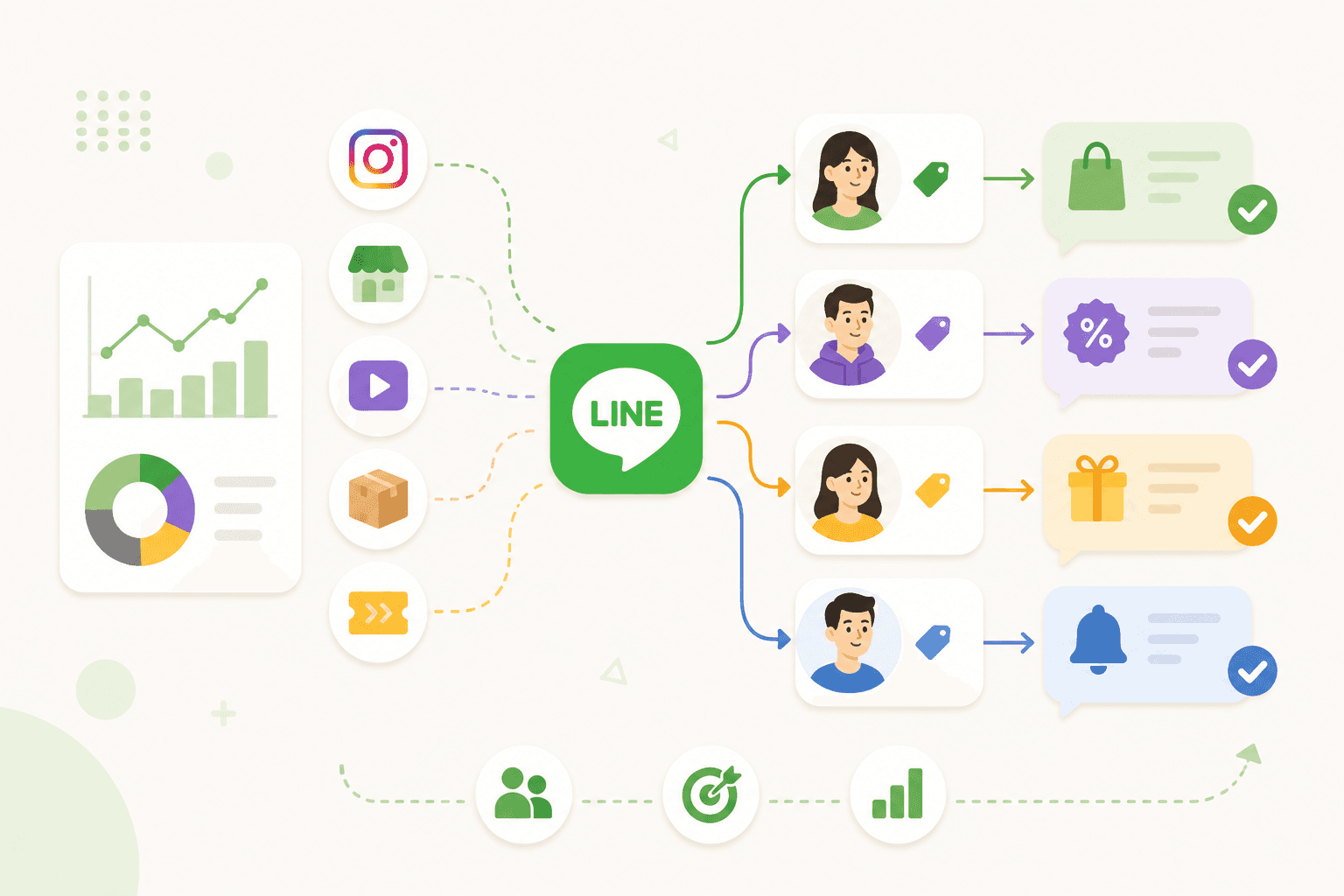
LINE chatbot can't answer cross-channel questions? It's not a vendor problem — it's a data boundary. Use Ezily's Visibility Layers framework to diagnose.
LINE Mini App is changing how Taiwan e-commerce brands interact with customers. This article breaks down five major shifts, three key opportunities, and how Ezily Touchpoints helps brands launch LINE Mini App experiences faster.